19 Aug 2026
Cloud Data Centers Powering Cross-Platform Feature Updates in Wagering Systems

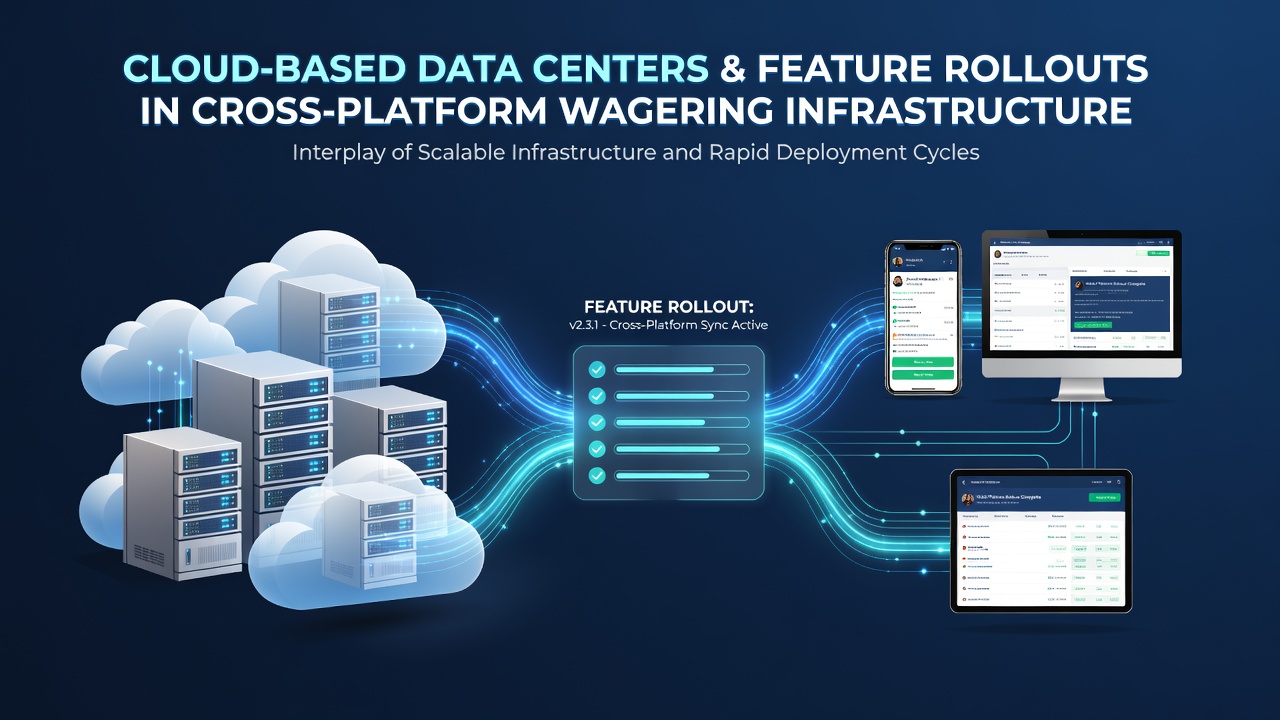
Cloud-based data centers have become central to how wagering interfaces manage updates across mobile, desktop, and tablet environments, allowing operators to push new features without disrupting service continuity. These facilities provide the computational resources needed for real-time synchronization, which means that when a new betting market or interface element appears on one device, the change propagates consistently to others through centralized processing nodes. In August 2026 industry reports showed increased reliance on distributed cloud networks to handle peak loads during major sporting events, where feature rollouts coincided with sudden traffic spikes.
Scalability Mechanisms in Cloud Environments
Operators use auto-scaling clusters within cloud data centers to accommodate the variable demands that accompany feature introductions, such as live odds adjustments or integrated loyalty modules. These systems allocate additional virtual machines during rollout phases, then release them once user activity stabilizes, which keeps infrastructure costs aligned with actual usage patterns rather than constant over-provisioning. Data from multiple platform operators indicates that this elasticity reduces deployment windows from weeks to hours, enabling simultaneous releases on iOS, Android, and web channels while maintaining session persistence for active users.
Feature Rollout Processes Across Platforms
Feature deployment pipelines now integrate directly with cloud orchestration tools, allowing development teams to stage updates in isolated containers before full activation. One approach involves blue-green deployments where the new version runs parallel to the existing interface, with traffic shifting gradually based on performance metrics collected from the data center layer. Cross-platform consistency requires careful coordination of API endpoints and content delivery networks, since a wagering interface must deliver identical odds calculations and user account states regardless of access point. Researchers tracking these patterns have noted that containerized microservices hosted in cloud environments make such coordination more reliable than legacy on-premise setups.
Integration Challenges and Data Synchronization
Even with robust cloud infrastructure, maintaining data integrity during feature rollouts presents ongoing technical demands. Latency between regional data centers can affect how quickly user preferences and transaction histories update when a new interface element, like an in-play statistics panel, activates across devices. Solutions often include edge caching combined with eventual consistency models, where the primary database in one cloud region serves as the source of truth while replicas handle read-heavy operations. Studies from technology research groups show that operators who optimize these synchronization layers experience fewer rollback incidents after feature launches, preserving both regulatory compliance records and user session data.
Regulatory and Security Considerations
Cloud providers must meet specific data residency requirements set by various jurisdictions, which influences where feature-related processing occurs during rollouts. For instance, certain markets require that player verification data remains within national borders even as interface enhancements deploy globally. Security protocols embedded in cloud architectures, including encryption at rest and in transit, support these constraints while permitting rapid feature testing through sandboxed environments. Figures from the Canadian Gaming Association highlight how compliant cloud configurations have supported smoother multi-jurisdictional launches in recent years.
Performance Monitoring During Updates
Real-time analytics dashboards connected to cloud data centers track key indicators such as load times, error rates, and transaction throughput immediately after a feature rollout begins. These monitoring systems trigger automated alerts if metrics deviate from established baselines, prompting operators to adjust traffic routing or temporarily disable select components. Observers note that this feedback loop has become tighter as machine learning models within the cloud environment predict potential bottlenecks before users encounter them, particularly when new live-streaming integrations or advanced filtering tools come online across platforms.
Conclusion
The relationship between cloud-based data centers and feature rollouts in cross-platform wagering interfaces centers on scalable infrastructure that supports rapid, consistent updates while addressing synchronization, security, and regulatory demands. As operators continue refining these systems, the technical interplay determines how efficiently new capabilities reach users on any device without compromising service stability or compliance standards. Industry analyses suggest continued investment in cloud orchestration will shape deployment strategies through the remainder of the decade.